
A - Anchoring the Mind
Inner peace must come first
This exercise can be done first thing in the morning or anytime peace seems distant.
It doesn't have to be longer than 5 minutes.
Having peace within is foundational to being able to respond well to life. One day my life will be over. There will be no next morning to-do list and no ability to respond to life’s challenges.
I need to be able to find peace today because my whole day depends on it. If my day depends on it, then my life depends on it. It begins within. Every day, every morning or anytime when peace is missing.
Choosing Inner Peace
Taking time to calm our mind is not necessarily religious, but it can be.
Practicing control over our mind and purposefully choosing peace of mind is a human condition that is available to anyone at any moment.
To find inner peace, it helps to step away from external noise.
It is not absolutely necessary to find a quiet place, but it definitely helps to reduce distractions.
With practice, we can actually find a grounded sense of peace even in the midst of the external noise.
A quiet place is helpful, but with practice we can find peace wherever we are.

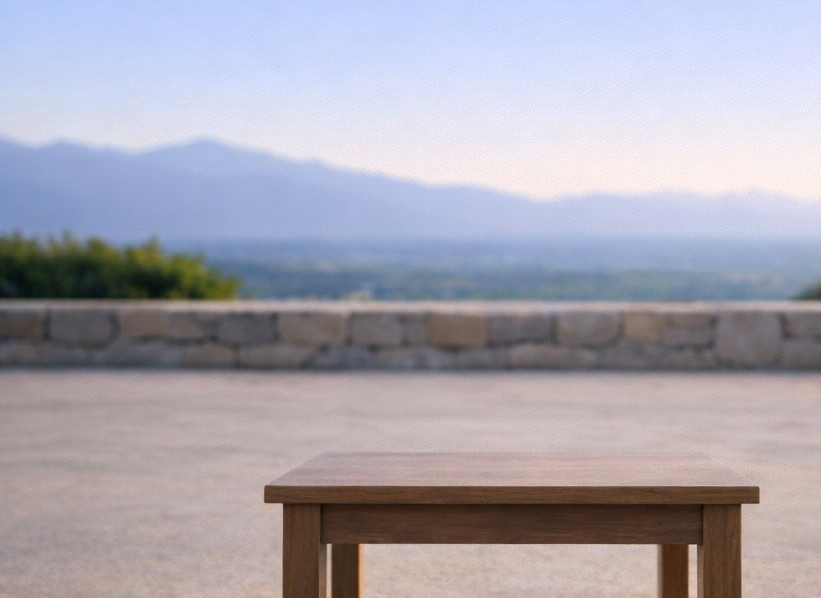
The Open Sky and Empty Table
I like to imagine a place with an open sky and an empty table. In my mind, clouds represent thoughts and situations. I don’t need to pay attention to them. They can simply float by. Why? Because, I am not my thoughts or emotions. I choose whether to give them attention.
The table represents my responsibilities, my accomplishments, my disappointments, and everything that needs my attention.
For the moment, I simply imagine a clear empty table. I can pick up where I left off in life some time later, but for now, there is nothing I need to solve. Why? Because, I am not the sum total of things I do or have done.
Pause and Breathe
With the goal of quieting my thoughts and emotions, I sit at the table. I pause. I discover that I am okay.
It doesn’t have to be a long time. 5 minutes or however long it takes to pause life for a moment is enough.
It is best to connect this experience with a breathing rhythm of long inhales (4-5 seconds) followed by longer exhales (6-8 seconds).
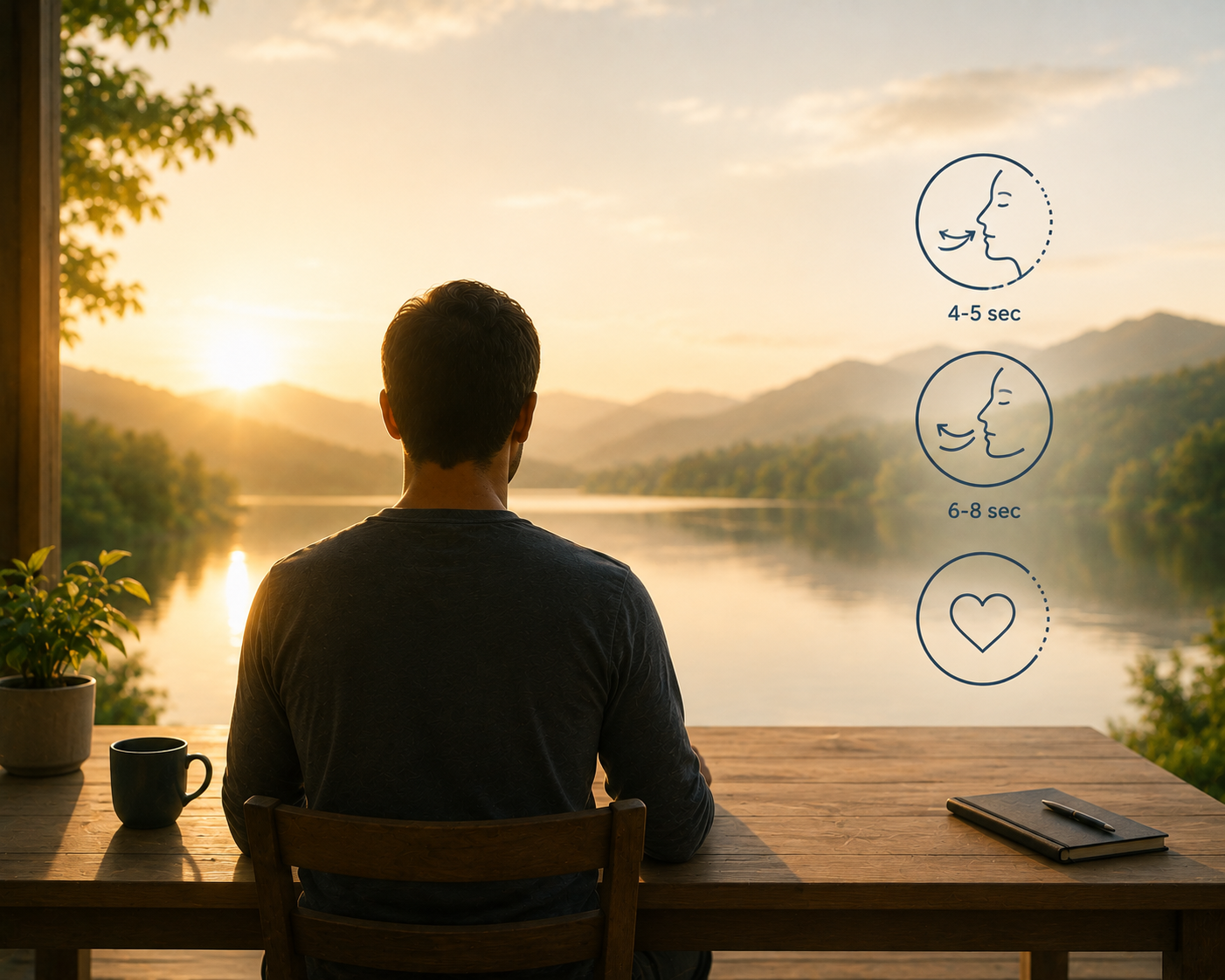
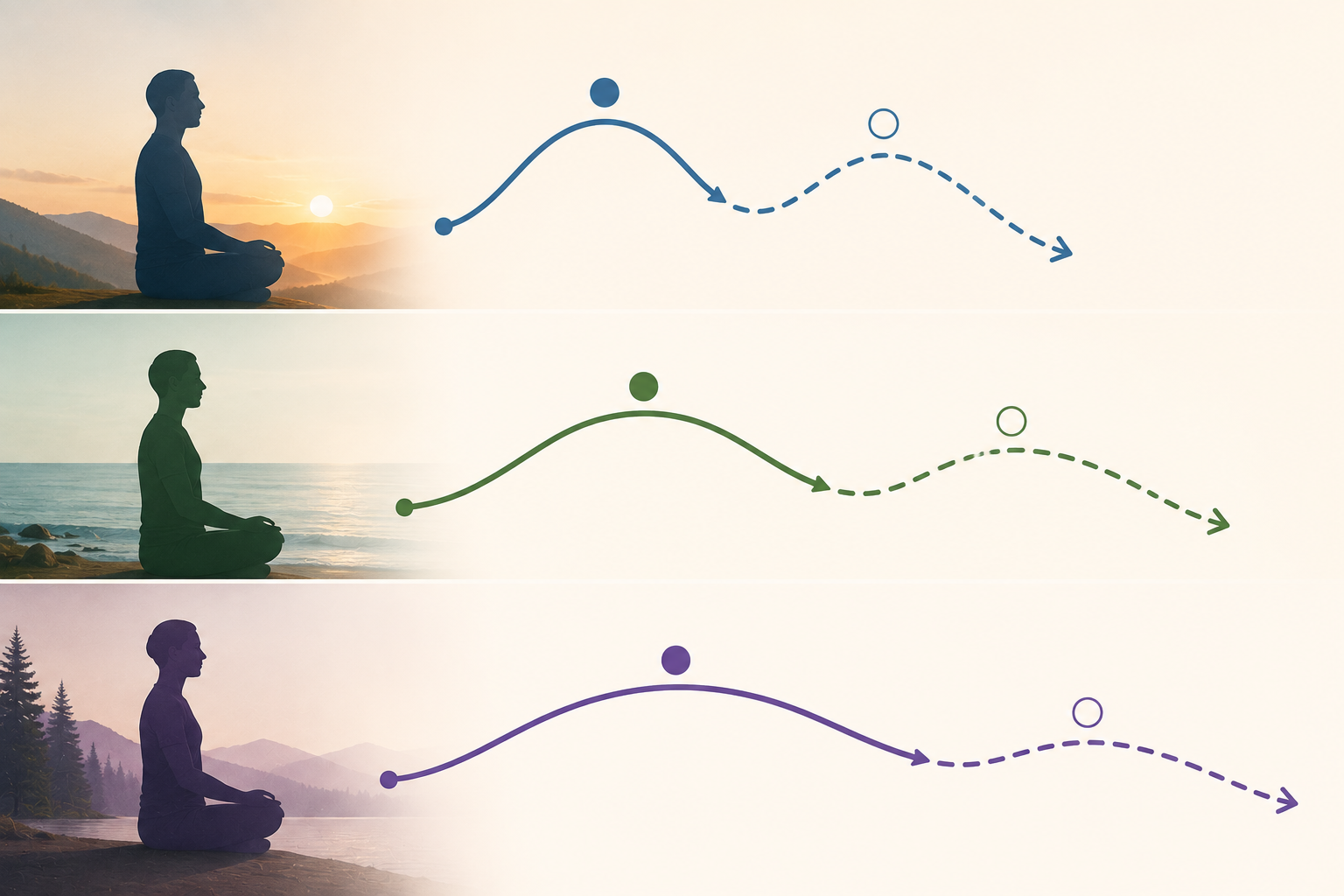
Example Breathing Rhythms
The goal is to simply lengthen and deepen the breathing.
Below are example breathing rhythms.
Inhale: 1 2 3 4
Exhale: 1 2 3 4 5 6
Inhale: I am here
Exhale: I choose what is right
Inhale: Things can wait
Exhale: I’m at rest
Inhale: If I must think…
Exhale: I'll choose goodness
Inhale: I feel at peace
Exhale: My mind is calm
Inhale: But for now…
Exhale: I choose quiet
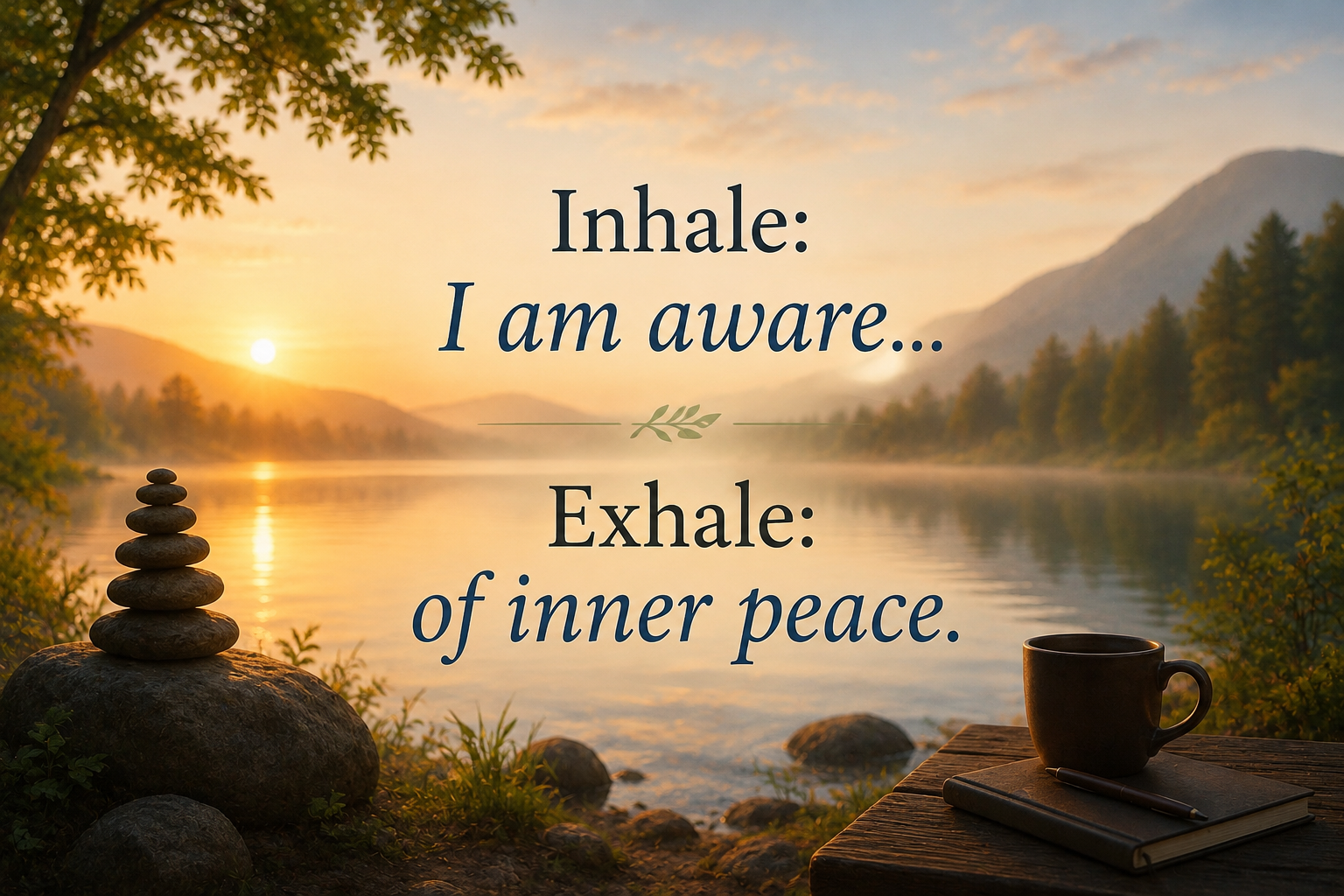
Example Breathing Rhythms
The goal is to simply lengthen and deepen the breathing.
Below are example breathing rhythms.
Inhale: I am aware…
Exhale: of inner peace.
Inhale: When I rise...
Exhale: I'll choose good.
Inhale: Time moves on…
Exhale: but not right now.
Inhale: There is hope.
Exhale: I keep on going.
Inhale: The table is clear.
Exhale: The sky is blue.
Inhale: Thoughts will come
Exhale: I'll let them go